Table of Contents
- What You'll Need Before Choosing Golf Clubs for Beginners
- Essential Golf Clubs for Beginners
- Steel vs Graphite Shafts for Beginners
- Forgiveness and Sweet Spot: Why They Matter
- Package Sets vs Individual Clubs
- Benefits of Custom Golf Club Fitting
- How to Choose Golf Clubs: Budget and Pricing
- Common Mistakes to Avoid When Selecting Your First Set
- Frequently Asked Questions
Last Updated: September 23, 2026
What You'll Need Before Choosing Golf Clubs for Beginners
Before you step onto the course, understanding how to choose golf clubs for beginners requires knowing what's in your bag and why each club matters. The fundamentals are straightforward: you need clubs that match your swing speed, forgive off-centre hits, and fit your physical frame. Most beginners overlook this last part entirely, which is why custom fitting exists.
Start by assessing three things. First, your swing speed, how fast your club moves through impact. This determines whether you need regular or stiff flex shafts, and it directly affects which clubs will launch the ball properly. Second, your handicap or skill level. A beginner typically benefits from cavity-back irons with perimeter weighting, which forgive mishits far better than blade designs. Third, your budget. Golf doesn't require spending thousands, though quality equipment does cost more than budget alternatives.
The right setup accelerates improvement because you're not fighting poor equipment. Clubs that don't match your swing characteristics will produce inconsistent results, making it harder to develop a reliable swing. Many beginners waste months struggling with unsuitable clubs before realising the problem isn't their technique, it's their gear.
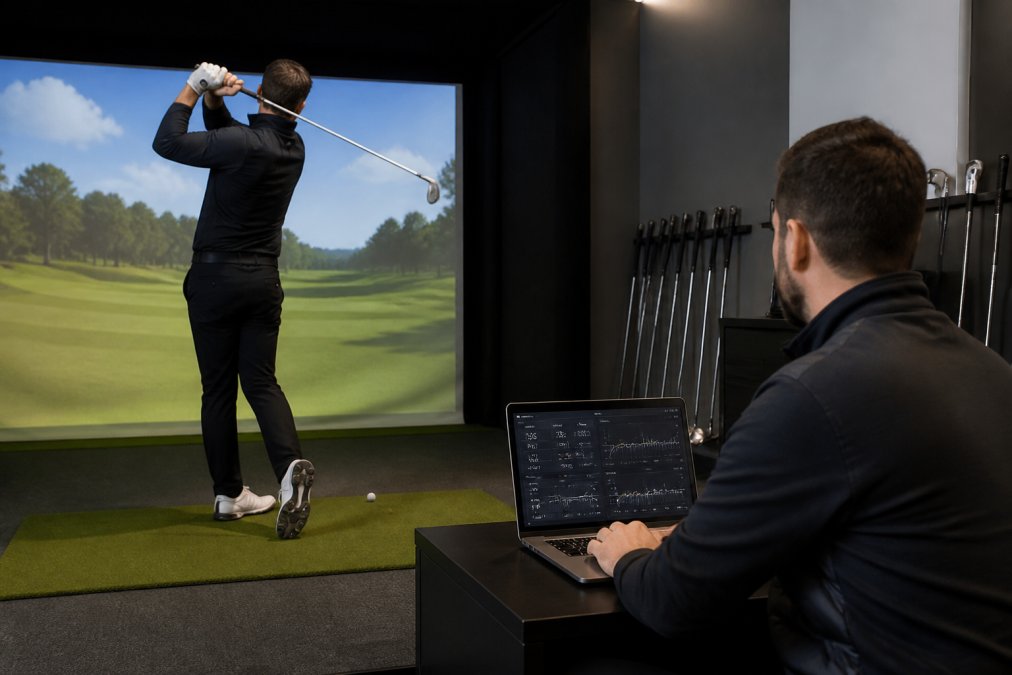
At Major Golf Direct, we help beginners build foundations that actually work. Our PGA Professional staff conduct custom fitting sessions using Trackman 4 technology, which measures your swing characteristics precisely and recommends clubs engineered for your specific needs. This removes guesswork from the equation.
Essential Golf Clubs for Beginners
A complete beginner set typically includes 14 clubs maximum (the legal limit) (The Player’s Equipment). However, most beginners start with 11-13 clubs, which covers all situations on the course without unnecessary complexity. Understanding what each club does helps you make informed choices about which ones to prioritise.
Driver and Fairway Woods
Your driver is the longest club in the bag, designed for maximum distance off the tee. A 10.5-degree loft is standard for beginners because it provides a higher launch angle, which helps get the ball airborne consistently. Look for drivers with oversized heads and heel-biased weighting, these features enhance forgiveness on off-centre strikes.
Fairway woods (typically 3-wood and 5-wood) bridge the gap between your driver and irons. A 5-wood is particularly valuable for beginners because it launches higher than a 3-wood and provides excellent distance from the fairway or rough. The shallow profile and perimeter weighting make these clubs forgiving on less-than-perfect contact, which is exactly what beginners need.
The sweet spot on modern woods is significantly larger than older designs. This expanded centre of gravity and perimeter weighting mean you'll still achieve decent distance even when you don't catch the ball perfectly. That consistency builds confidence and lets you focus on developing your swing rather than compensating for poor equipment.
Hybrids and Irons
Hybrids are arguably the most valuable addition to a beginner's set. They combine the launch characteristics of woods with the control of irons, making them forgiving and easy to hit from various lies. A 4-hybrid and 5-hybrid provide excellent gapping between your fairway woods and long irons, and they're significantly easier to hit than traditional 2-irons or 3-irons.
Your iron set typically runs from 5-iron through sand wedge (5, 6, 7, 8, 9, PW, SW). Cavity-back irons are essential for beginners, the hollow back creates a lower centre of gravity and moves weight to the perimeter, maximising forgiveness. This design means you'll achieve reasonable results even on mishits, which accelerates the learning process.
The wide sole on cavity-back irons also promotes smoother contact, particularly from rough or tight lies. This feature alone makes cavity-back irons worth the investment for someone building their first set. Blade irons, by contrast, offer less forgiveness and require more precise contact, save those for later when your swing is more consistent.
Wedges and Putter
Beyond your pitching wedge (which comes in your iron set), a sand wedge is essential for short-game scoring. Many beginners add a gap wedge (between pitching and sand wedge) once they understand their distances better. These clubs make the difference between one-putt and three-putt situations around the green.
Your putter is arguably the most important club in your bag, roughly 40% of your strokes happen on the green. For beginners, a blade putter with clear alignment aids works well. The machined face provides consistent feel and roll, and simple alignment lines help you aim accurately. Don't overthink putter selection early on; focus on getting comfortable with the weight and length first.
Steel vs Graphite Shafts for Beginners
Shaft material dramatically affects how a club performs and feels. Steel shafts are heavier, provide consistent feedback, and cost less. Graphite shafts are lighter, which increases swing speed and reduces fatigue, particularly valuable if you have slower swing speeds or physical limitations.
For beginners, graphite shafts in the driver and fairway woods are standard because the lighter weight helps generate more clubhead speed. This translates to greater distance without requiring a faster swing. Steel shafts work well in irons because the heavier feel provides better feedback about contact quality, helping you develop consistency.
View Full Range Of Package Starter Sets →
Many beginner package sets mix both materials: graphite in the woods and steel in the irons. This combination balances distance, feedback, and cost. Regular flex graphite shafts suit most beginners, as stiff flex requires higher swing speeds to perform properly.
Forgiveness and Sweet Spot: Why They Matter
The sweet spot is the optimal contact point on the clubface where maximum energy transfers to the ball. Modern club design has expanded the sweet spot significantly, meaning you'll achieve reasonable results even on off-centre hits. This is the single biggest advantage today's equipment offers beginners.
Forgiveness describes how well a club performs when you don't hit the sweet spot perfectly. Clubs with a higher centre of gravity and perimeter weighting provide more forgiveness. A larger clubhead also increases forgiveness because the sweet spot physically covers more area.
This matters enormously for beginners because your swing is still developing. You won't consistently hit the sweet spot, so clubs engineered for forgiveness let you build confidence and improve faster.
Package Sets vs Individual Clubs
Package sets offer complete solutions at fixed prices, making them ideal for beginners. A 13-piece set includes everything you need without requiring individual decisions about each club. The Ben Sayers M8 Men's 13 Piece Golf Package Set at £299 provides excellent value, including a matching lightweight cart bag and headcovers. Practicing with these clubs at home allows you to refine your swing mechanics using golf simulator software to bridge the gap between initial lessons and your first full round on the course.
For slightly more investment, the Cobra FLY XL 2 11 Piece Men's Golf Package Set (£595) adds premium features like heel-biased weighting in the driver and hybrid technology that improves launch characteristics. The included stand bag is lighter than cart bags, beneficial if you prefer walking the course.
Building clubs individually offers more customisation but requires expertise. You'll select specific models of drivers, irons, putters, and bags separately. This approach costs more upfront and demands knowledge about gapping, shaft specifications, and compatibility. Most beginners benefit from package sets because they're engineered as complete systems.
The TaylorMade RBZ Complete Golf Package Set (£1,195) represents the premium package option, featuring Inverted Cone Technology in the woods and Speed Pocket technology in the irons.

Package Set |
Price |
Best For |
Key Features |
|---|---|---|---|
PowerBilt Pro Power |
£199 |
Budget-conscious beginners |
Cavity-back irons, lightweight bag, oversized driver |
Ben Sayers M8 |
£299 |
Value-focused players |
Graphite woods, steel irons, cart bag included |
Cobra FLY XL 2 |
£595 |
Players wanting premium features |
Heel-biased weighting, hybrid technology, stand bag |
TaylorMade RBZ |
£1,195 |
Serious beginners seeking advanced technology |
Speed Pocket, Inverted Cone, maximum forgiveness |
Benefits of Custom Golf Club Fitting
Custom fitting analyses your individual swing characteristics and recommends clubs specifically engineered for your needs. This removes guesswork and ensures you're not fighting equipment that doesn't match your game.
How to Choose Golf Clubs: Budget and Pricing
Budget determines which options are realistic. Entry-level packages start around £195 and provide functional clubs suitable for learning. Mid-range packages (£400-£800) add forgiveness features and better materials. Premium packages (£1,000+) incorporate advanced technology and premium components.
Common Mistakes to Avoid When Selecting Your First Set
The biggest mistake beginners make is choosing clubs based on brand reputation alone without considering personal fit. A famous brand name doesn't guarantee the clubs suit your swing. Generic recommendations from friends work for them, not necessarily for you.
Frequently Asked Questions
What set of golf clubs should I buy as a beginner?
Start with a package set that includes a driver, fairway wood, hybrids, irons (5-9), wedges, and putter. These sets provide everything needed for a full round and are designed for forgiveness on mishits. Options like the Cobra FLY XL 2 (£595) or Ben Sayers M8 (£299) offer excellent value for beginners. Package sets save money compared to buying individual clubs and ensure proper club gapping for consistent distance progression.
Do beginners need custom-fitted golf clubs?
Custom fitting optimises your clubs to match your swing speed, launch angle, and playing style, which can improve consistency and distance. While not essential for beginners, fitting addresses common issues like poor club selection based on swing characteristics. Many beginners benefit from a fitting assessment before purchasing to ensure they select the right specifications, particularly for shaft flex and club length. This investment often prevents costly mistakes in equipment selection.
What is the difference between steel and graphite shafts for beginners?
Graphite shafts are lighter, generate higher launch angles, and reduce vibration on mishits, making them ideal for beginners seeking forgiveness and distance. Steel shafts offer more feedback, consistency, and durability at a lower cost. Beginners typically benefit from graphite in woods and hybrids for easier launch, while steel irons provide reliable feel and control. Many beginner package sets combine both materials strategically across the set.
How much should a beginner spend on their first set of golf clubs?
Beginner sets range from £195 to £1,195 depending on quality and brand. Budget-friendly options like the Precise XD-01 (£195) suit those testing their commitment to golf, while mid-range sets like Ben Sayers M8 (£299) and Cobra FLY XL 2 (£595) offer excellent performance and forgiveness. Premium sets like TaylorMade RBZ (£1,195) provide advanced technology. Choose based on your commitment level and budget; avoid overspending before establishing your playing consistency.