Table of Contents
- What Is Wedge Bounce and Why It Matters
- How Bounce Angle Is Measured
- Low Bounce vs High Bounce Wedges
- How to Choose Wedge Bounce for Your Swing
- Wedge Bounce vs Grind: Understanding the Difference
- 52 Degree Wedge Bounce: What's Standard and What Works
- Common Mistakes in Bounce Selection and How to Avoid Them
- Frequently Asked Questions
Last Updated: October 13, 2026
What Is Wedge Bounce and Why It Matters
Wedge bounce is the angle between the leading edge and trailing edge of a wedge's sole. When you address the ball, the trailing edge sits lower than the leading edge. This gap is what we call bounce, and it's measured in degrees.
Think of it this way: the leading edge is the front of the club that hits the turf first. The trailing edge is the back. If the trailing edge sits 10 degrees below the leading edge, you have 10 degrees of bounce.
Why does this matter? Bounce is the difference between a clean contact and a fat shot. It's the reason some golfers hit crisp chips from tight lies while others chunk them into the rough. At Major Golf Direct, understanding bounce and choosing the right amount for your swing can transform your short game.
How the Sole Interacts With Turf and Sand
The sole of your wedge is not a single flat surface. It has curves and edges that interact with the ground in specific ways.
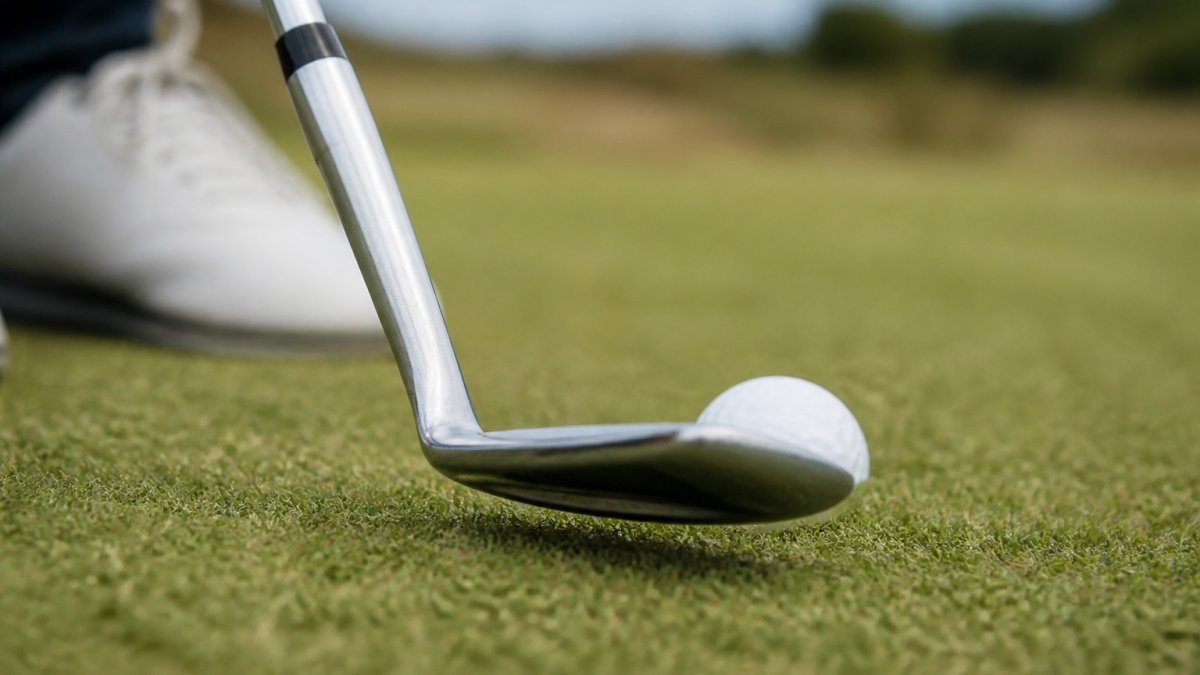
Here's what happens on solid turf: the trailing edge (the back part of the sole) contacts the ground first if you have adequate bounce. This prevents the leading edge from digging too deep.
In soft sand, bounce works differently. Sand is forgiving and offers less resistance than turf. A sole with good bounce will skip across the sand surface rather than penetrating it.
The grind of the sole also matters here. Grind refers to the shape and curvature of the trailing edge. A wider grind spreads the impact across more surface area. A narrower grind concentrates pressure on a smaller area.
How Bounce Prevents Digging
Digging is the enemy of consistent short-game play. It happens when the leading edge catches the turf and the club digs down instead of sliding through. The result is a fat shot that travels half the distance you intended.
Bounce prevents digging by offering resistance. When the trailing edge contacts turf before the leading edge, it creates a pivot point. The club bounces up slightly rather than driving down.
Low bounce wedges (4-8 degrees) have minimal trailing edge protection. They're designed for golfers with steep angle of attack who already dig into the turf naturally.
High bounce wedges (12-14 degrees) offer maximum resistance. They suit golfers with shallow swings who struggle to take a proper divot. The high bounce helps the club glide through turf and prevents thin contacts on tight lies.
Effective bounce is different from stamped bounce. Stamped bounce is what's printed on the club. Effective bounce is what you actually get based on your shaft lean at address.
How Bounce Angle Is Measured
Bounce angle is measured in degrees. A wedge manufacturer places the sole flat on a surface and measures the angle between the leading edge and trailing edge. This is straightforward and consistent across all manufacturers.
Standard wedge bounce ranges from 4 degrees to 16 degrees. Most golfers use wedges with 8-12 degrees of bounce. Wedges with 4-8 degrees are considered low bounce. Wedges with 12-16 degrees are high bounce.
The measurement is simple, but the practical impact varies based on your swing. A 10-degree bounce wedge feels very different in the hands of a digger versus a sweeper. The digger benefits from lower bounce. The sweeper benefits from higher bounce.
Low Bounce vs High Bounce Wedges
The choice between low bounce and high bounce wedges is one of the most important decisions in your short game setup. This choice directly affects how often you hit clean contacts versus fat shots.
High-Bounce Wedges: When to Use Them
High-bounce wedges (12-14 degrees) are ideal for golfers with shallow swing paths and those who play on soft turf. If you tend to sweep the ball rather than dig into the ground, high bounce is your friend.
High bounce excels in these conditions:
- Soft, fluffy turf that offers little resistance
- Bunkers with deep sand
- Tight lies where you fear digging
- Slower greens where you need more forgiveness
- Golfers with naturally shallow angle of attack
The downside of high bounce is versatility. High-bounce wedges struggle from firm turf and tight lies where you need a clean strike. They also make it harder to open the clubface for flop shots because the sole width resists turning.
The Cleveland Golf RTZ Wedge in 50/10 configuration offers 10 degrees of bounce. This sits in the mid-to-high range and can suit recreational golfers seeking forgiveness.

Low-Bounce Wedges: When to Use Them
Low-bounce wedges (4-8 degrees) suit golfers with steep angle of attack and those who play firm turf regularly. If you naturally dig into the ground and take divots, low bounce prevents excessive digging.
Low bounce works best in these situations:
- Firm, tight turf with minimal give
- Bunkers with firm sand
- Golfers with steep swing paths
- Players who want maximum shot versatility
- Courses where turf conditions change rapidly
The challenge with low bounce is forgiveness. Low-bounce wedges punish thin contacts and require a more precise strike. They demand better technique and timing.
The Cleveland Golf RTZ Wedge in 56/8 configuration offers 8 degrees of bounce. This can work for golfers comfortable with a sharper strike.
How to Choose Wedge Bounce for Your Swing
Choosing the right bounce starts with understanding your swing characteristics. Two factors dominate: your angle of attack and the turf conditions you play most often.
Bounce Selection by Swing Delivery and Turf Firmness
Your angle of attack is how steeply or shallowly you deliver the club into the ball. Measure this with a launch monitor or ask your PGA Professional during a fitting.
Steep angle of attack (6+ degrees down):
- Choose low bounce (4-8 degrees)
- Your natural digging tendency needs less resistance
- Firm turf suits low bounce perfectly
- You'll hit cleaner strikes with less sole interference
Shallow angle of attack (2-4 degrees down):
- Choose high bounce (12-14 degrees)
- Your sweeping motion benefits from sole support
- Soft turf suits high bounce well
- The sole helps prevent thin contacts
Mid-range angle of attack (4-6 degrees down):
- Choose mid bounce (8-11 degrees)
- You adapt to various conditions reasonably well
- Mid bounce offers a balance of forgiveness and versatility
- Most golfers fit this category
Turf firmness matters equally. Play soft turf regularly? Go higher bounce. Play firm turf? Go lower bounce. If your course varies, choose mid bounce as your primary wedge and add a second wedge with different bounce for specific conditions.
Bounce Selection by Sand Conditions
Sand conditions change how bounce performs in bunkers. Wet, firm sand behaves like turf. Dry, fluffy sand requires different bounce characteristics.
Firm sand (wet or packed):
- Choose low-to-mid bounce (6-10 degrees)
- The sand offers good resistance
- Low bounce prevents the club from bouncing too much
- You can use a steeper swing without fear
Soft sand (dry and fluffy):
- Choose mid-to-high bounce (10-14 degrees)
- The sand offers little resistance
- High bounce helps the sole glide across the surface
- You'll avoid digging and burying the club
Very soft sand (deep bunkers):
- Choose high bounce (12-16 degrees)
- Maximum sole width and resistance
- The club floats across the sand surface
- Forgiveness is critical in these conditions
Test different bounce options in the sand at your home course. Note which feels most comfortable.
Wedge Bounce vs Grind: Understanding the Difference
Bounce and grind are related but separate concepts. Many golfers confuse them, and that confusion leads to poor wedge selection.
Bounce is the angle between the leading edge and trailing edge. It's a single number: 8 degrees, 12 degrees, etc.
Grind is the shape and curvature of the trailing edge and sole. Common grinds include S (standard), L (low), C (chambered), and X (extra wide).
Think of bounce as the vertical angle and grind as the horizontal shape. A wedge can have 10 degrees of bounce with an S grind, or 10 degrees of bounce with an X grind.
The PowerBilt Golf X-Grind Satin Wedge demonstrates how grind influences performance. The X-grind sole is engineered for maximum versatility across all lies and turf conditions.

When selecting a wedge, evaluate both bounce and grind. A high-bounce wedge with a wide grind offers maximum forgiveness. A low-bounce wedge with a narrow grind demands precision but offers maximum shot control.
52 Degree Wedge Bounce: What's Standard and What Works
The 52-degree wedge is the gap wedge for most golfers. It fills the distance gap between your pitching wedge and sand wedge. Standard bounce for a 52-degree wedge ranges from 8 to 12 degrees.
Most manufacturers default to 10 degrees of bounce on 52-degree wedges. This is the middle ground that suits most golfers. It offers enough forgiveness for recreational players while maintaining versatility for skilled strikers.
The Callaway Golf Opus SP Wedge in 54/10 configuration offers 10 degrees of bounce. The 54-degree loft pairs with the mid-range bounce.

If you're a digger with a steep angle of attack, choose 8 degrees of bounce on your 52-degree wedge. If you're a sweeper with a shallow angle of attack, choose 12 degrees. If you're unsure, start with 10 degrees and adjust based on how the club feels in play.
Common Mistakes in Bounce Selection and How to Avoid Them
Most golfers make predictable mistakes when choosing wedge bounce. Understanding these errors helps you avoid them.
Mistake 1: Ignoring your angle of attack. Many golfers choose bounce based on what their friend uses or what looks good on the shelf.
Mistake 2: Choosing bounce without testing. Don't buy a wedge based on the spec sheet alone.
Mistake 3: Using identical bounce in all wedges. Your pitching wedge, gap wedge, sand wedge, and lob wedge don't need the same bounce.
Mistake 4: Forgetting about grind. Bounce without grind context is incomplete information.
Mistake 5: Not adjusting for course conditions. If your course has soft turf year-round, high bounce makes sense.
Mistake 6: Confusing effective bounce with stamped bounce. Shaft lean at address changes effective bounce. Lean the shaft forward and you reduce bounce.
Choosing the right wedge bounce is one of the quickest ways to improve your short game.
Your angle of attack, turf conditions, and sand conditions should guide your decision. Test different options and trust what your hands tell you.
Frequently Asked Questions
What is the normal bounce for a 52 degree wedge?
Most 52 degree wedges range from 8 to 12 degrees of bounce. A 10-degree bounce is considered standard. However, the right bounce depends on your swing style, course conditions, and how you play. Steeper swingers may benefit from lower bounce (8 degrees), while shallower swingers may prefer higher bounce (12 degrees). The Cleveland Golf RTZ wedge in 50 loft offers 10 bounce.
How does turf or sand condition affect the wedge bounce I should choose?
Softer turf and fluffy sand require higher bounce to prevent the club from digging too deep. Firm turf and tight lies demand lower bounce to allow cleaner contact without the sole bouncing away from the ball. On firm courses, a 6-8 degree bounce works best; on soft courses, 10-14 degrees is preferable. If you play multiple conditions, a mid-bounce wedge (10 degrees) offers reasonable versatility. Testing different bounce angles during practice on your home course helps confirm what suits your conditions best.
Is low or high bounce better for a steep swing?
Low bounce (6-8 degrees) is better for a steep swing because it allows the leading edge to dig into the turf without the sole bouncing back up. Steep swingers naturally strike the ground with a steep angle of attack, so low bounce prevents fat shots and gives clean contact. High bounce is better for shallow, sweeping swings where the club approaches the ball at a gentler angle. Matching bounce to your swing delivery prevents contact consistency problems and improves short-game precision.
What is the difference between wedge bounce and grind?
Bounce is the angle between the leading edge and trailing edge on the sole, measured in degrees. Grind is the shape and design of the sole itself, which can be removed or modified to change how the club interacts with turf and sand. For example, the PowerBilt X-Grind Satin Wedge features a versatile sole grind engineered for maximum playability from all lies. Bounce is fixed when you buy the club; grind determines how the bounce performs in different situations. Both work together to control digging, spin, and shot versatility.